
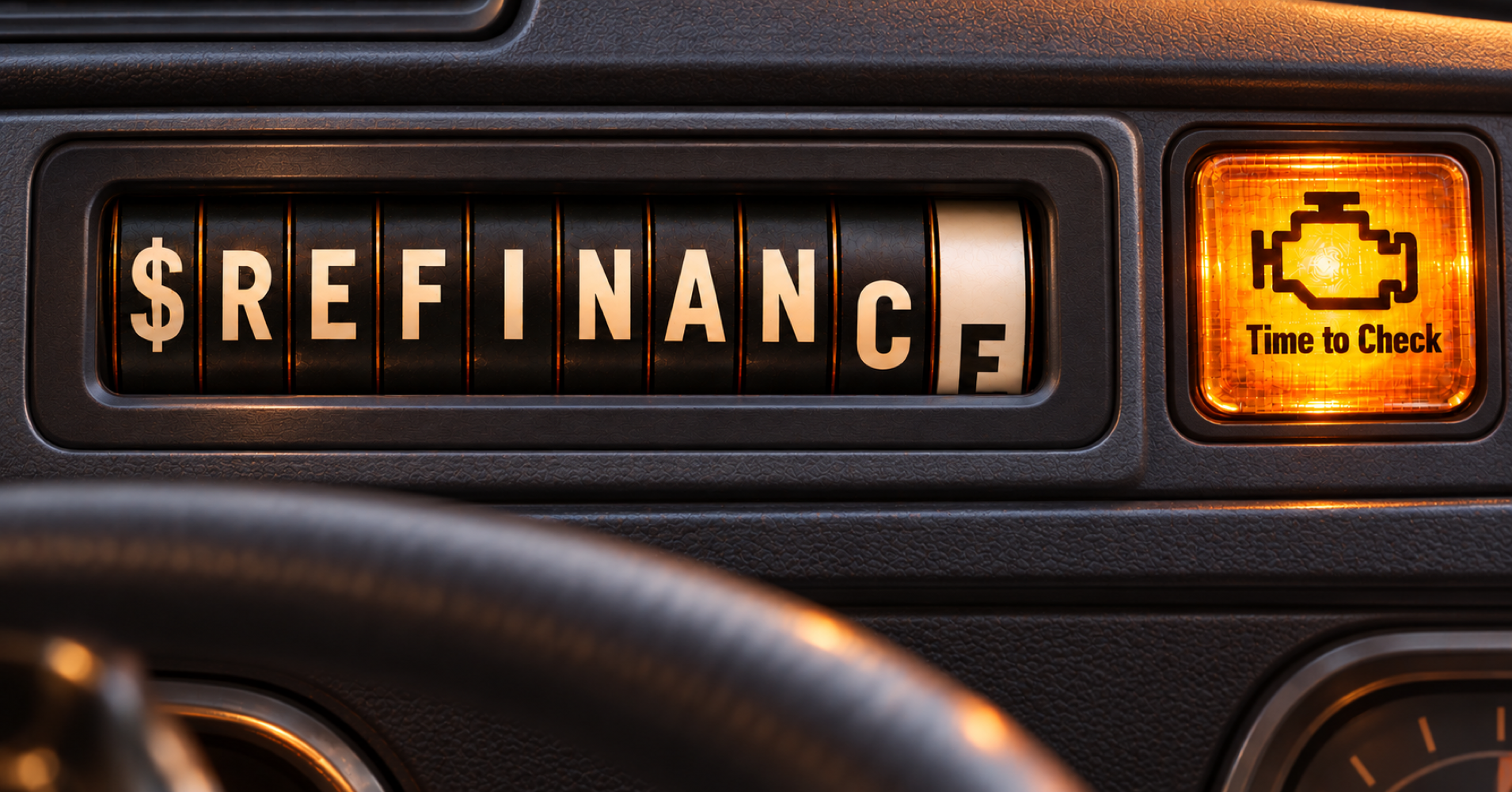
You probably know your car payment by heart.
But the interest rate you agreed to when you bought it? You might have to look that one up.
Most of us set up our payments and move on. Between work, errands, and getting everyone where they need to go, reviewing an auto loan rarely makes the to-do list.
Still, the financing that worked when you bought your car might deserve another look today.
Refinancing replaces your existing auto loan with a new one, potentially with a lower interest rate or a payment that better fits your budget.
Here are three signs it could be worth exploring.
1. Interest Rates Have Decreased
When you purchased your car, you worked with the financing options available at the time. Maybe you needed a reliable vehicle for work, or your old car finally called it quits.
But just because a loan made sense then doesn't mean it's still your best option today.
Average auto loan interest rates have eased from the higher levels borrowers faced in 2024. According to Experian, the average rate for a new-car loan was 6.84% in the second quarter of 2024, compared with 6.35% in the same quarter of 2026. For used-car loans, the average fell from 12.01% to 11.19% over that period—a decrease of 0.82 percentage points. If you financed your car during that higher-rate period, it could be worth checking what you qualify for today.
Those averages don’t guarantee a lower rate for every borrower. They do give you a reason to pull up your current loan and compare it with what’s available now—especially if you financed when rates were higher.
A lower rate could reduce your monthly payment, your remaining interest costs, or both, depending on the new loan’s terms.
2. Your Credit Has Improved
Your car might be the same, but your financial situation could look a lot different from when you first bought it.
Since buying it, perhaps you’ve paid down credit card balances, established a longer credit history, or built a consistent record of on-time payments. Those changes may help you qualify for a better interest rate than you could get before. Lenders consider your credit history alongside factors such as income, loan amount, and repayment term when evaluating your application.
An improved credit profile makes it worth comparing offers, even if market rates haven’t changed dramatically.
Think of it as checking whether your loan still reflects where you are today.
3. Your Budget Could Use Some Breathing Room
The grocery trip costs more. Insurance premiums keep climbing. . Then a school expense or home repair shows up, and suddenly there’s less left at the end of the month.
If rising everyday costs have tightened your budget, you’re probably already looking for ways to create a little margin. Your car loan is one expense worth reviewing.
With average auto loan rates below their higher 2024 levels, refinancing may offer an opportunity to lower your payment and create some margin in your monthly budget. The difference will depend on your current rate and the new terms you qualify for.
That extra breathing room could help cover essentials, rebuild an emergency fund, or make the monthly budget feel less stretched.
Just look beyond the payment. Extending your repayment period can also lower the monthly amount, but it may increase the total interest you pay over time. Compare the new loan’s APR, fees, payoff date, and total remaining cost with your existing loan before deciding.
The goal is to find a payment you can manage with terms that support your longer-term finances.
Bonus: Your Car Loan Could Be Easier to Manage
If you already bank with a credit union like Radiant, refinancing there can bring another benefit: keeping more of your finances together.
Instead of maintaining a separate lender login, you can manage your car loan alongside your everyday banking. Radiant’s eBanking and mobile tools let members view accounts and make Radiant loan payments, bringing those tasks into the same familiar app and login.
When the numbers work in your favor, that convenience adds to the financial benefit. You can check your balance and make payments where you already manage your money.
Give Your Car Loan a Quick Checkup
You don't need to be unhappy with your car to take another look at your financing. Start by checking your current interest rate, remaining loan balance, monthly payment, and remaining loan term. Then compare those details with the refinancing options available to you.
If rates have decreased, your credit has improved, or your budget could use some breathing room, explore auto loan refinancing with Radiant. A little time reviewing your loan could help you find a better fit for the road ahead.
Data pulled from:
(Experian 2024 data, 2026 data)
(Consumer Financial Protection Bureau)